Mark your calendars for Saturday 30 May 2026! The Now26 conference is happening in the beautiful city of Paris. It’s going to be an epic event, with a mix of inspiring speakers covering a wide range of topics like graphic design, web design, motion design, publishing, visual identity, communication, and type design. If you haven’t already, don’t miss out on the best rates by registering now!
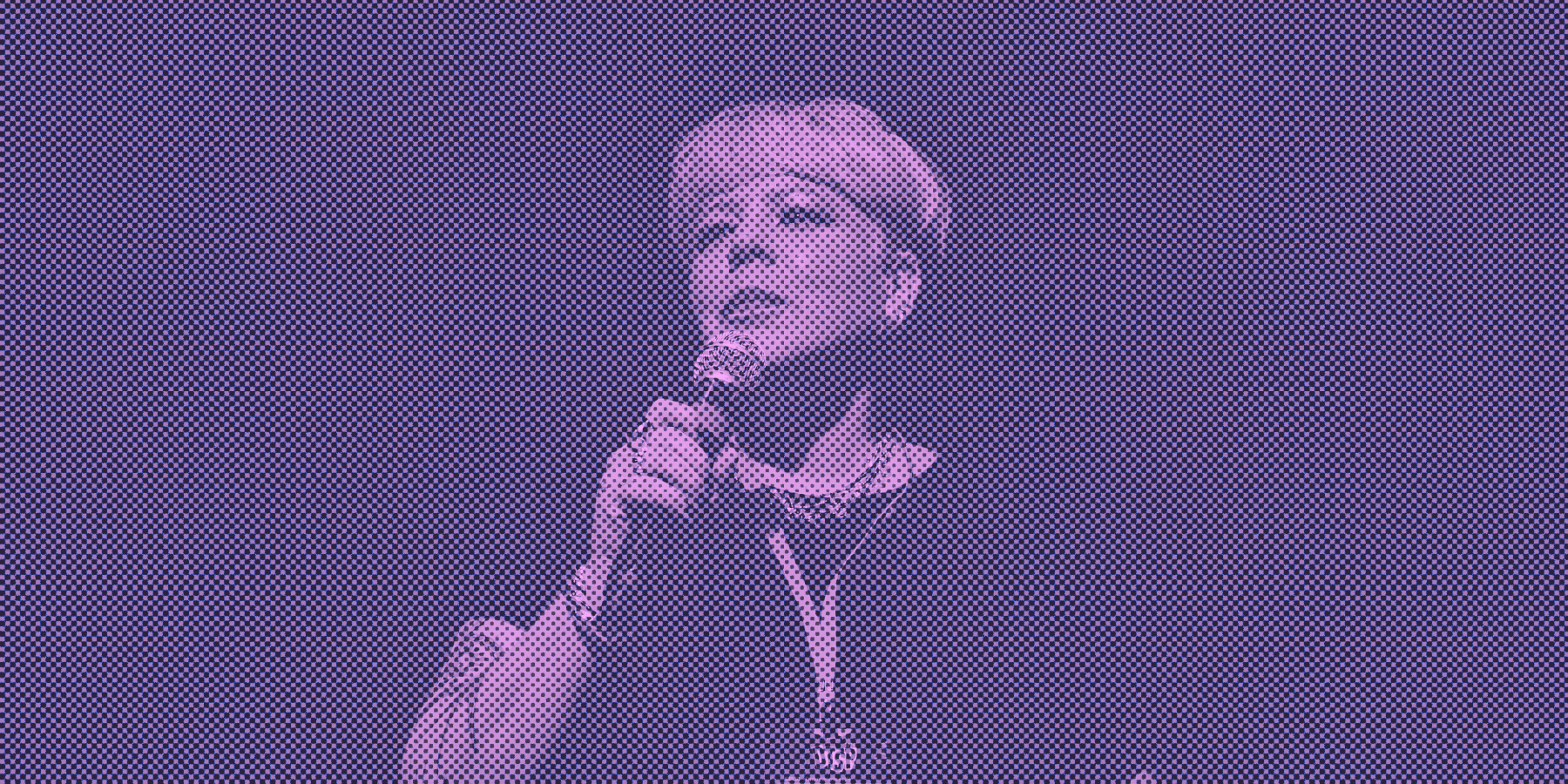
We would like to invite you to explore the profiles of our esteemed guests. Discover the captivating interview of Flavia Zimbardi.
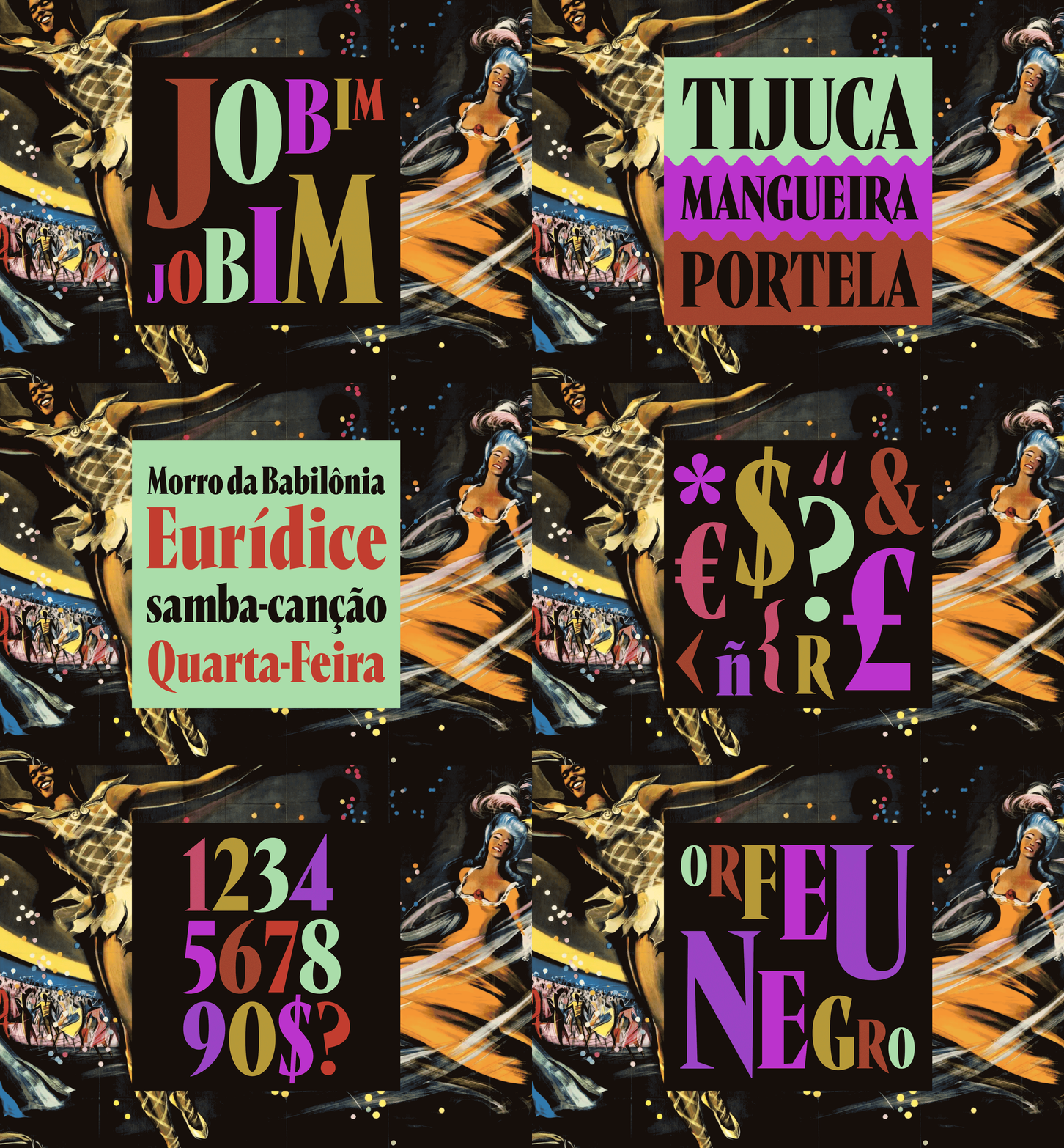
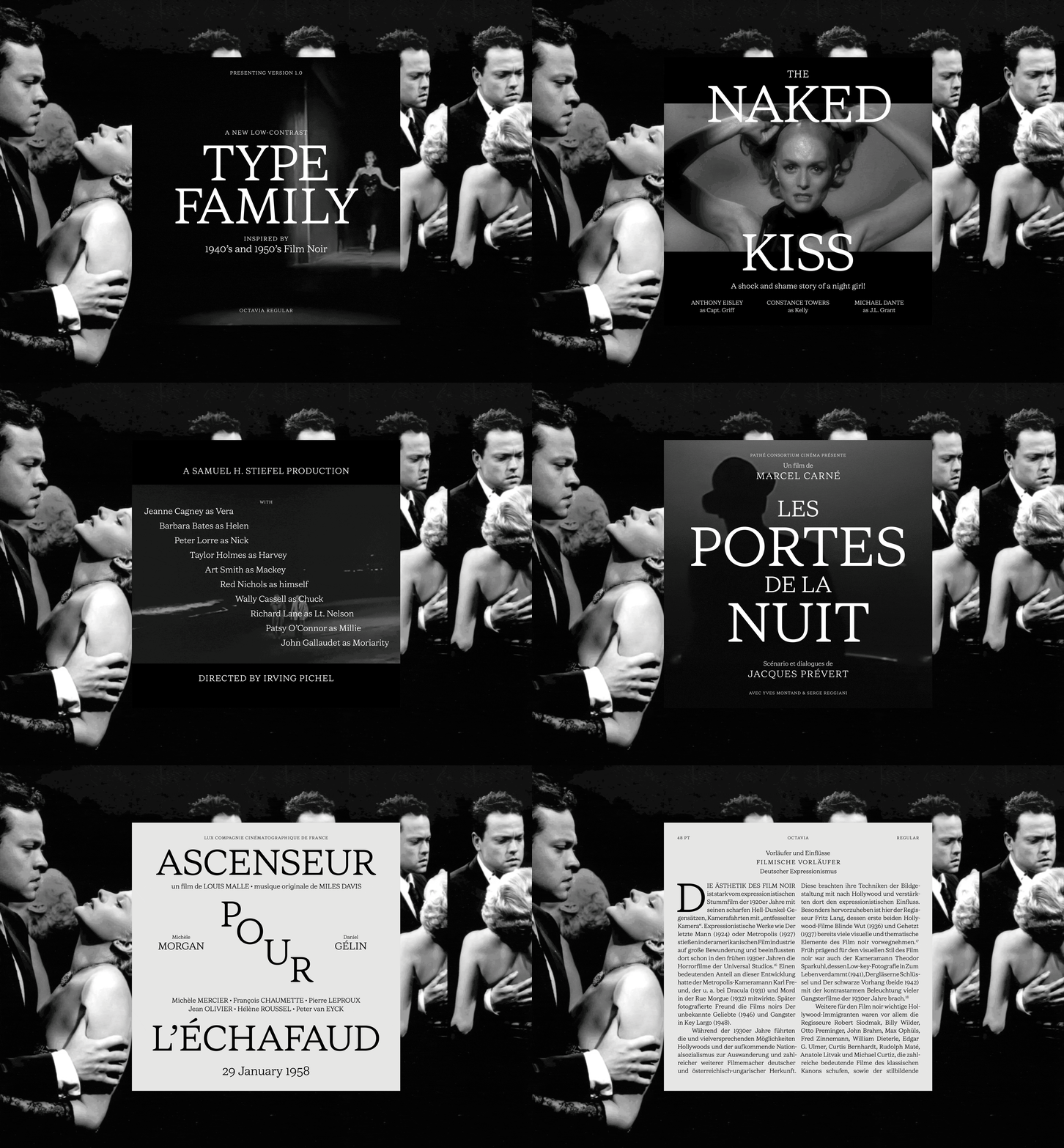
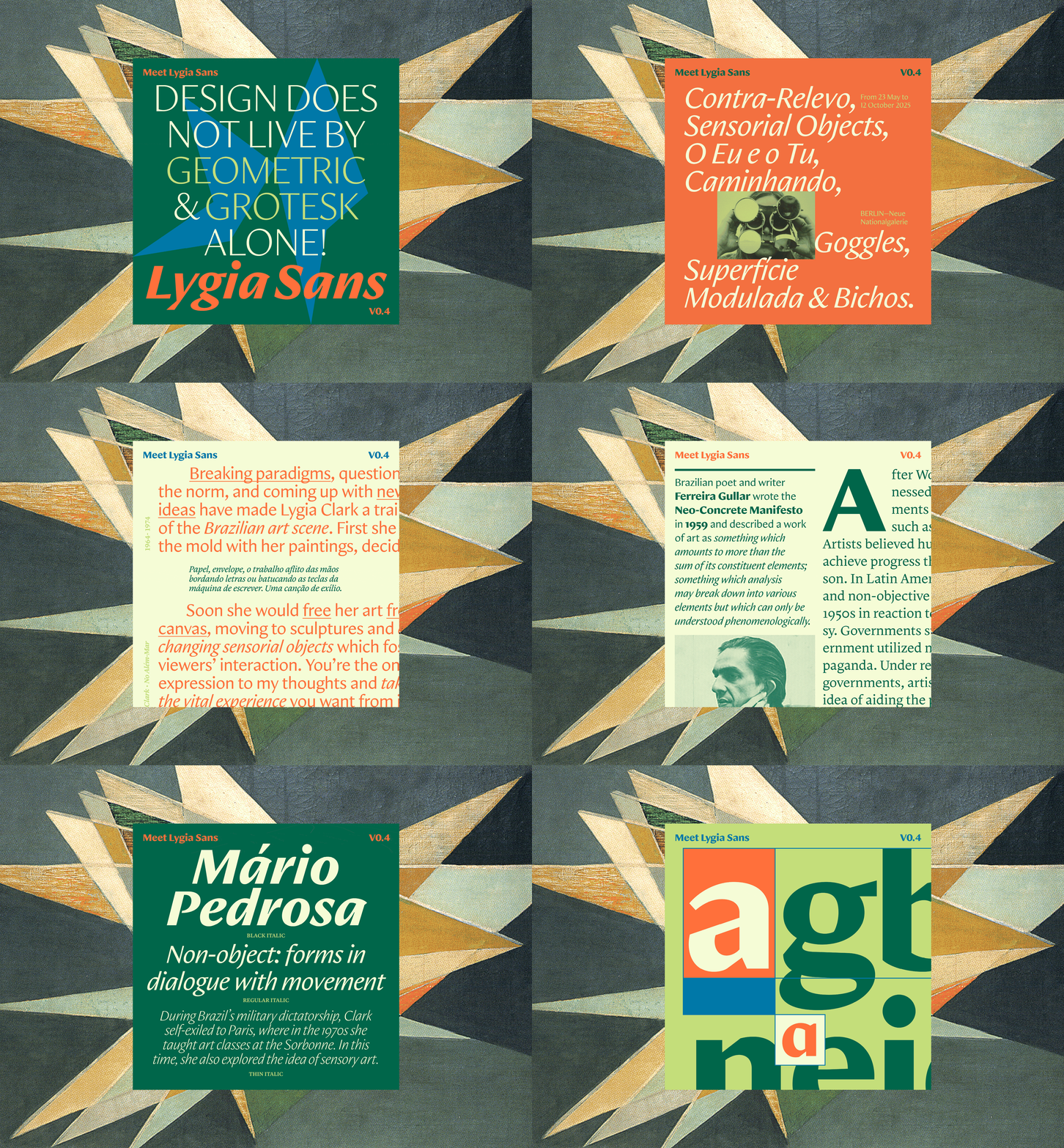
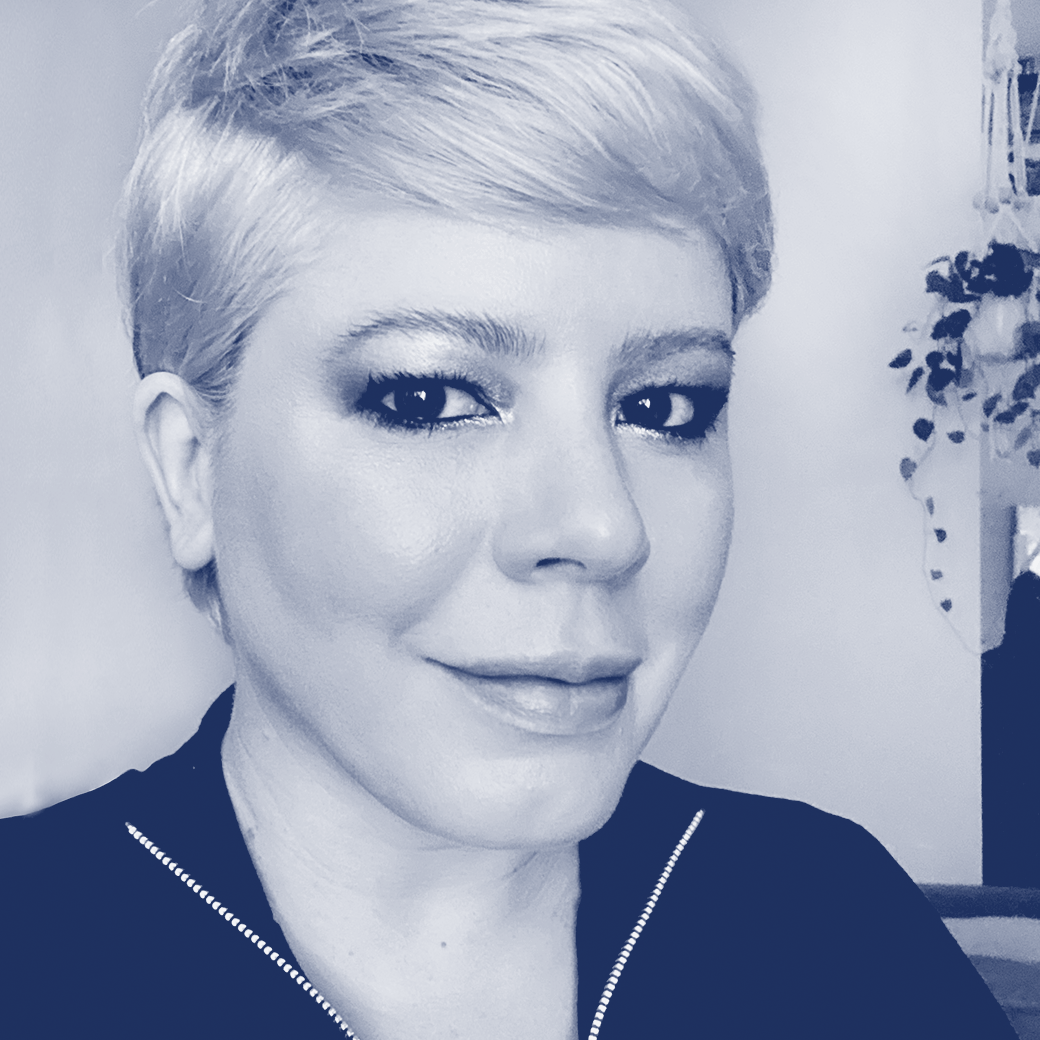
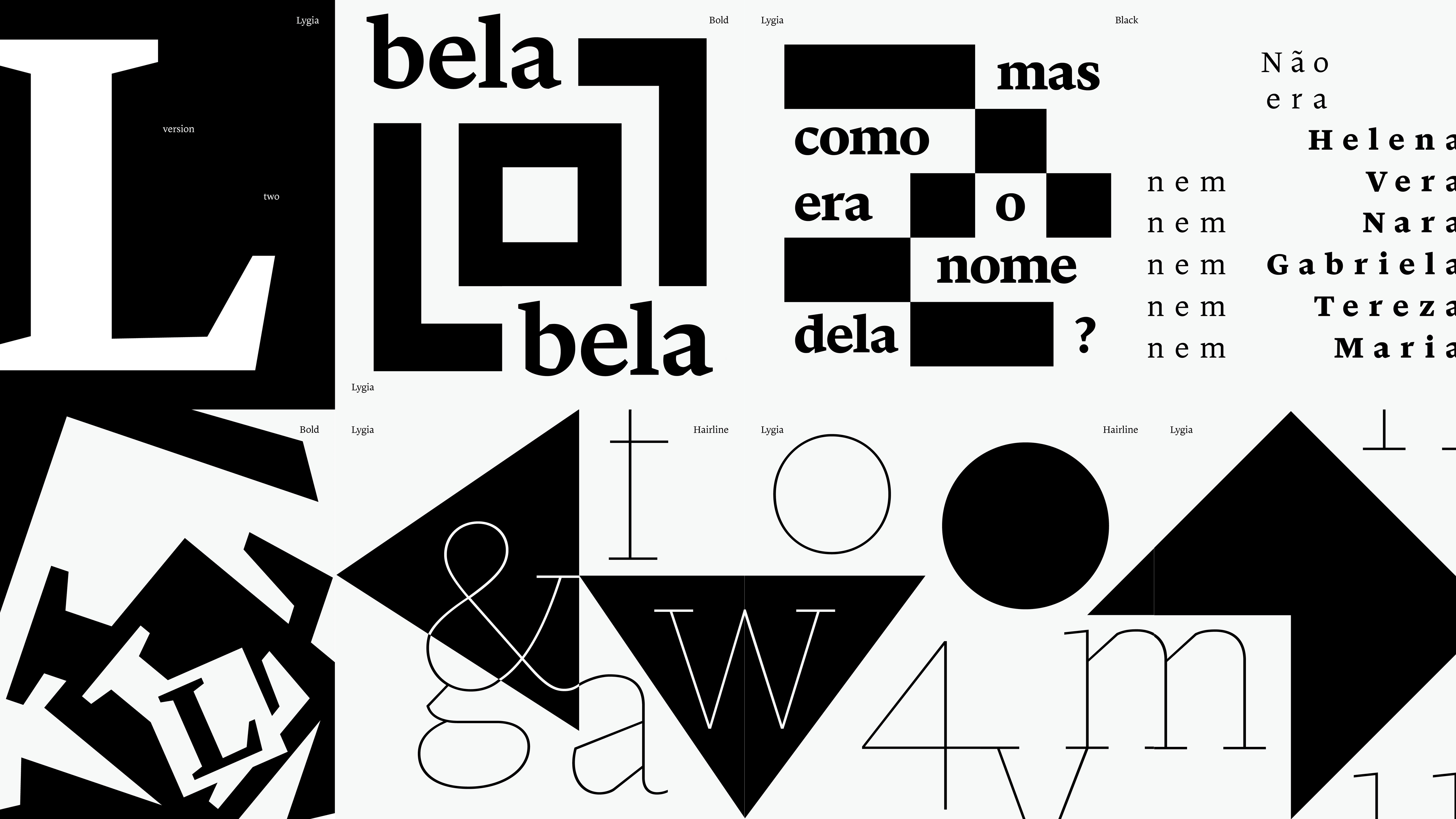
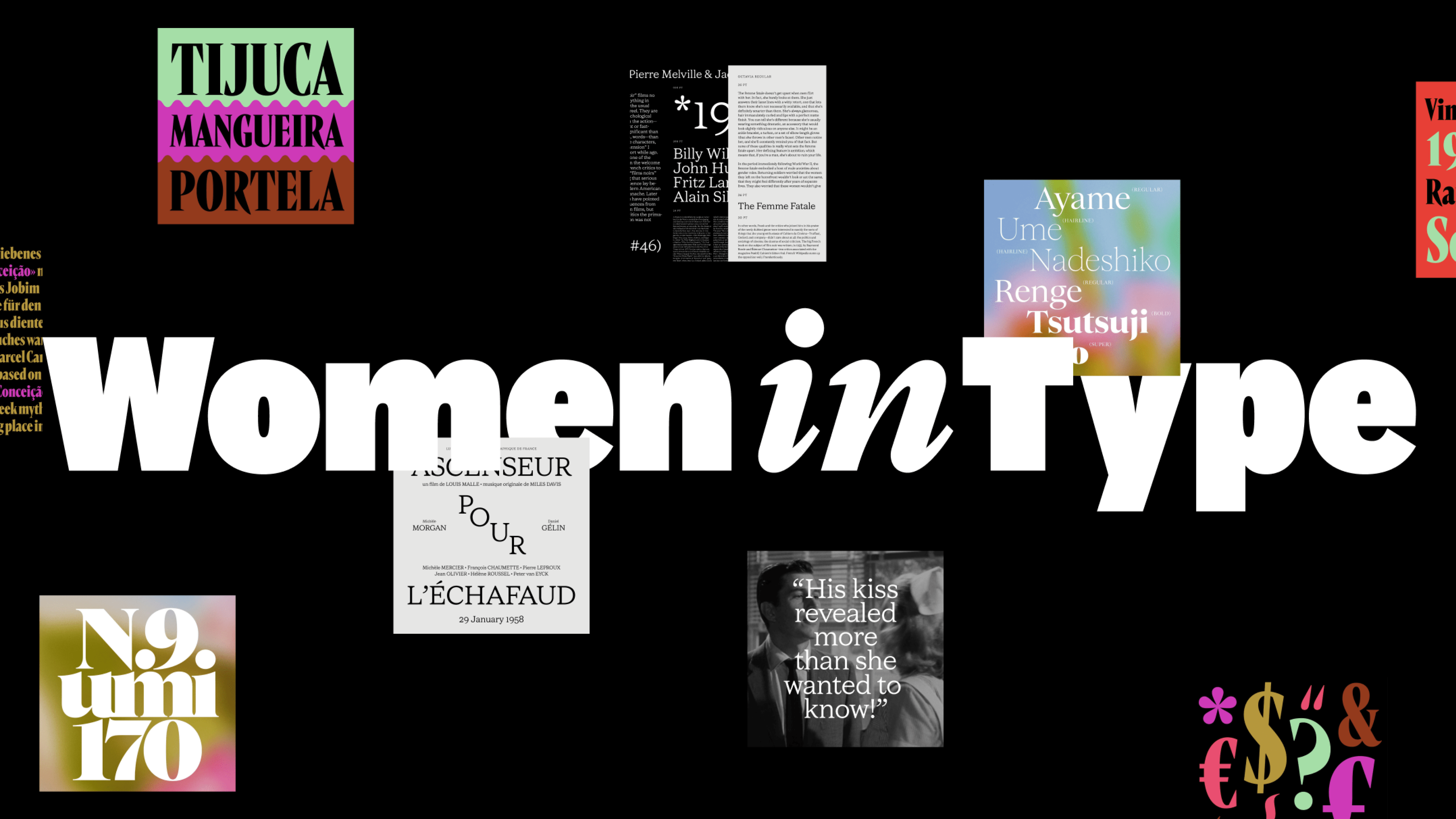
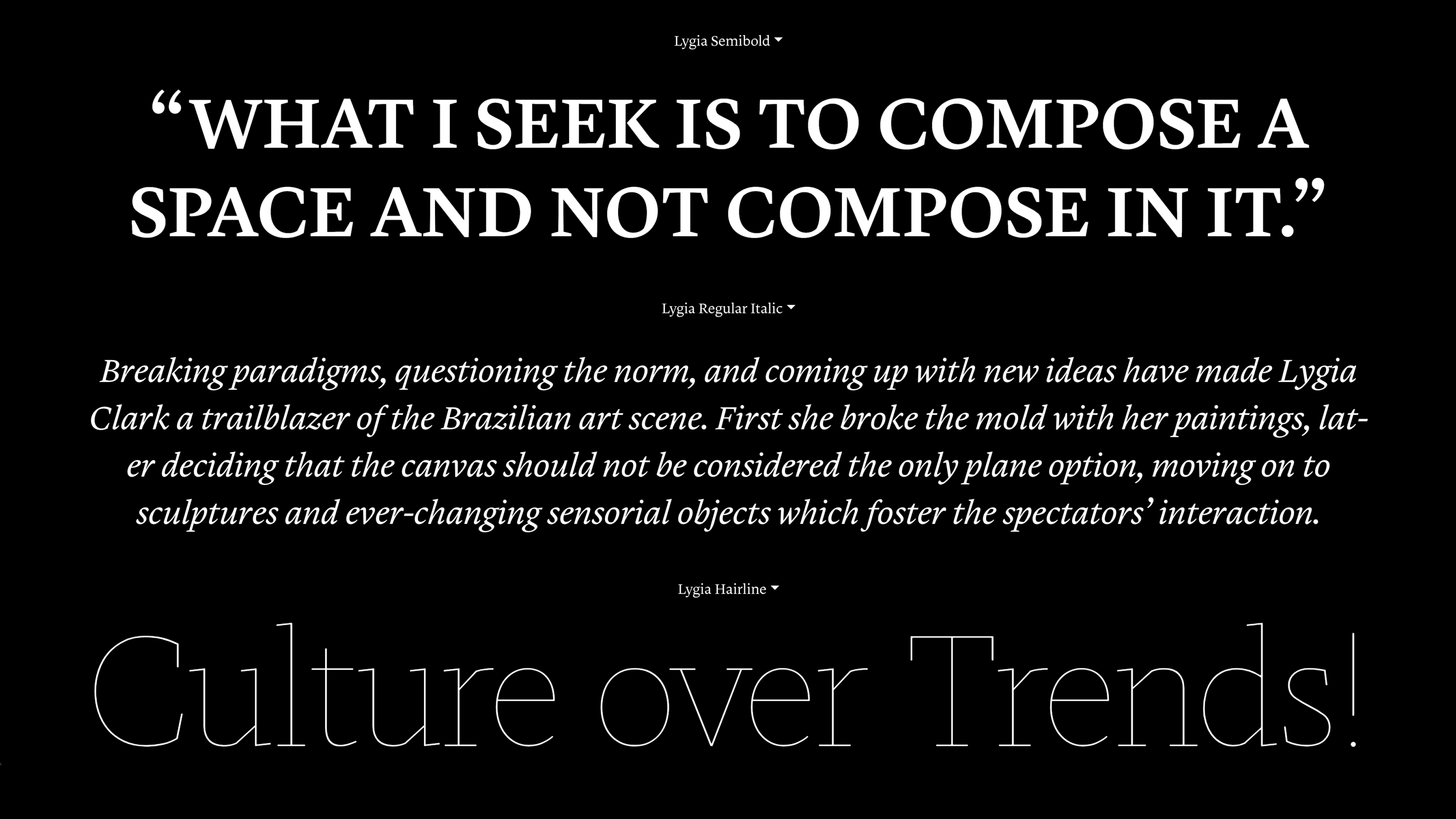
Biography Flavia Zimbardi is an independent type designer and visual artist from Rio de Janeiro. Her work combines Latin American cultural heritage, activism, and a strong commitment to gender equality. She is the founder of Women in Type. Her typefaces have been commissioned by institutions including The Metropolitan Museum of Art, Penguin Random House, and Pentagram. In 2018, she became the first Brazilian woman recognized by the Type Directors Club for her typeface Lygia.
Interview
What’s your favorite way to start your day?
Flavia Zimbardi I usually spend my mornings on the admin side: answering emails, updating to-do lists, transferring royalties (when it’s that time of year). Basically, anything that could otherwise interrupt my six-hour deep-focus stretch—which is carefully reserved for afternoons and early evenings. Sometimes that also includes tactile tasks like watering the plants or printing calendars, to help declutter the brain. It took me years to realize that my best self doesn’t enter the room before noon, so anything that requires deep cognitive effort—writing, designing, strategy—happens later in the day.
What do you do to evade yourself from work?
Flavia Zimbardi At heart, I’m a party girl. Going out with friends for drinks or dancing has always been my release valve. No wonder I got into bartending, so I could also bring the function home. Yes, that means I’m always trying out new signature cocktails. But as I had to crank up the working hours lately (too many in-progress fonts to finish), I decided to create new rituals: long walks with the dog, reading a book by the beachfront, exploring new spots in Rio, Pilates three times a week. And curiously enough, many of my best ideas come from these moments away from the computer.
“Typefaces are meant to address questions, sometimes technological or stylistic. For me, more often it’s about perspectives that are missing.”
– Flavia Zimbardi
What’s your favorite kind of music to listen while working?
Flavia Zimbardi I listen to a lot of music. 83,647 minutes in 2025 to be exact. For work, it depends on what I’m doing. Kerning asks for high bpm-hard rock, occasionally techno or drum & bass, to sustain momentum through repetitive precision. Then, if I’m drafting or editing, I shift to jazz rap and trap soul. Beyond that, I tend to make seasonal playlists that mirror my mental and emotional state, almost like soundtracks to specific periods. Last spring was Lola Young, Raye, Rubii, bright, defiant energy. Before that, in winter: Doechii, Tyler, the Creator, Kaytranada. Most recently, I've rediscovered and am obsessed with Justice.
What are your thoughts on social media these days?
Flavia Zimbardi I recently wrote a newsletter about this, so it’s clearly a subject I've been wrestling with. Sure, social platforms can still be useful for exposure, but the whole ecosystem has become far too performative for my taste. Instagram feels unbearable. I’m no longer on Twitter... I miss when posting was fun and digital spaces were shaped by affinity. Back in 2016, it was much easier to connect with peers online, ask questions, and build community. Now I only see traces of that culture on Mastodon. But honestly? I think we should invest in IRL relationships. Go to conferences. Approach strangers we admire. Flex our communication skills beyond screens. Be present. I’m sure the impact will be far more gratifying (and I dare to say, lucrative) than feeding an algorithm.
Do you remember when you decided to pursue your career in design?
Flavia Zimbardi Growing up, I was always the kid who liked to draw. I even won a few school competitions, including making the science fair logo at age twelve. Choosing to study design felt inevitable, although I wasn’t sure of what a creative career could look like. At home, my only references were doctors and engineers. Then I was charmed by editorial design, which led me into publishing, using typography heavily, experimenting with lettering, and sharpening my sensitivity to letterforms. Still, I never considered switching to type until moving to New York, where I had access to specialized education (shout out to my alma mater Type@Cooper). Truth is, my trajectory has been a sequence of experiments; some organic, some forced by economic crisis, and some by crazy intercontinental moves.
“In other words: hire more women!”
– Flavia Zimbardi
What drives you to create new typefaces?
Flavia Zimbardi Most of my type projects sit at the intersection of culture and history. My process is very cerebral and research-driven—concept comes first. I rarely start from a sketch on a napkin; it’s usually a spark from something I’ve lived through, have interest in, or am curious about, followed by long periods of connecting references and piecing it all together. On one hand, they’re love letters to my Brazilian heritage. On the other, exercises in structural problem-solving. Typefaces are meant to address questions, sometimes technological or stylistic. For me, more often it’s about perspectives that are missing.
What can you tell us about the state of the font market today?
Flavia Zimbardi I have more questions than answers here. Technically, it’s never been easier to set up a solo practice, but it's getting increasingly hard to sustain one. The market is oversaturated, power is consolidating rapidly, and most systems are built for scale over craft. The challenge isn't how to publish anymore; it's where and under what conditions.
Total independence offers autonomy, but it also means carrying the full weight of production, marketing, client support, etc. Platforms (especially Adobe) can add reach and stability, but trade control. And I’m still figuring out the right balance. Currently, you can license my work directly at flaviazim.com or via FutureFonts. There's also this ambitious dream of launching a platform for Women in Type. What I do see clearly is that context matters. Designers aren't just buying fonts—they're buying what a typeface stands for, who made it, the story behind it.
What are the main challenges for type designers today?
Flavia Zimbardi Type is slow, cumulative, and highly specialized, yet it exists in an economy that rewards immediacy. Excellence and originality are just the baseline now. Creatives are expected to make their practice public—build a brand and a following—while a small number of corporations ultimately shape how fonts are perceived and valued.
As much as I prioritize depth, I also care about the long-term impact: what will outlast me as an individual. Collaboration, sharing knowledge openly, being intentional about the projects I take on. Amplifying diversity and fostering the spaces I wish existed when I was getting started. Acts of service and resistance — that’s my pulse.
How do you balance feminist activism with commercial work in your professional practice?
Flavia Zimbardi I don’t see feminist activism and commercial work as opposing forces; they’re deeply entangled. Business models don’t sit outside politics, they actively reinforce or challenge existing imbalances: who gets paid and who gets recognition.
Women in Type emerged precisely from that gap: commissioning and producing female-led projects as a way to boost their unique perspectives and economic power. The goal is to create conditions in which more women can enter the industry and move into leadership positions.
Contraforma plays a different but complementary role. It’s a space for reflection and critique—where I connect individual experience to broader patterns. I’m not just sharing work or ideas, but contributing to an archive that helps ensure women’s contributions to type design won’t be written out of history again.
“Total independence offers autonomy, but it also means carrying the full weight of production, marketing, client support, etc.”
– Flavia Zimbardi
How can the type industry address gender disparities?
Flavia Zimbardi Let me be blunt. What’s up with most type programs having a 50/50 student balance and that not translating to the market? From where I stand, I see projects upon projects being released crediting only men (from production to mastering, from writing to visuals)—especially in the Global South. I can’t believe it’s for a lack of qualified candidates. We need more opportunities, fair contracts, and clearer pathways that make a tangible difference. Jobs, talks, juries, commissions—move from passive discourse to active support. In other words: hire more women! It’s that simple.
What will be the message you would like to convey during your Now26 talk?
Flavia Zimbardi I want to remind people that the future of type isn’t abstract or inevitable, it’s being shaped right now by very concrete decisions. And that designers have more agency than we’re taught to believe, alive through the structures we choose to build, sustain, or consciously walk away from. I don't think there's one true way of doing anything. I think there are people, circumstances, and opportunity.
Thank you very much Flavia!
– Interview by Benjamin Rouzaud
Register to the graphic & type conference in Paris ➼ Now26 conference