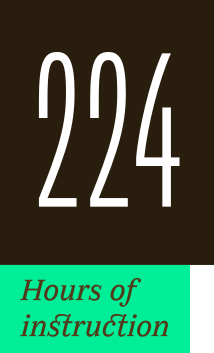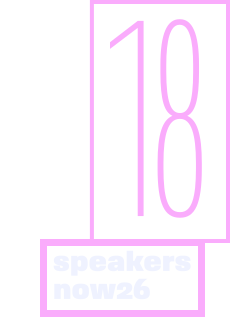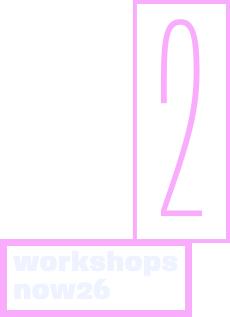

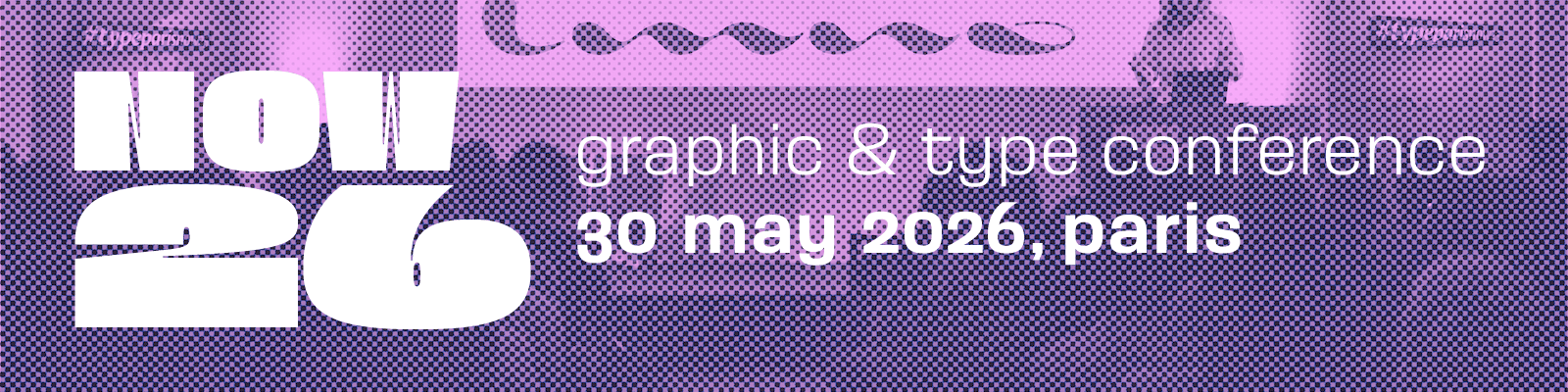
Mark your calendars for Saturday 30 May 2026! The Now26 conference is happening in the beautiful city of Paris. It’s going to be an epic event, with a mix of inspiring speakers covering a wide range of topics like graphic design, web design, motion design, publishing, visual identity, communication, and type design. If you haven’t already, don’t miss out on the best rates by registering now!
We would like to invite you to explore the profiles of our esteemed guests. Discover the captivating interview of Margot Retif and Justine Suillaud who run together Martine.
Biography Martine, an independent creative studio in Paris, specialises in branding for emerging and established brands, both large and small, in France and internationally. We love meaningful typefaces and expressive colours, creating thoughtful and sensitive brands. Depending on the project, we collaborate with copywriters, strategists, web designers and photographers to build strong and lasting identities. We value an open and collaborative approach, listening, explaining and building together.
Interview
What’s your favourite way to kickstart your day?
Martine We meet at the studio almost every day and usually work remotely about one day a week. We generally arrive between 9:00 and 9:30am, once the morning rush is over — between sports, children, and family organisation. Our days quickly become efficient and well structured: having young children has taught us how to optimise our time and work within controlled schedules.
From time to time, we enjoy meeting outside the studio, at the café we love next door, to catch up on ongoing projects, come up with ideas, and reflect on our wishes. Changing scenery does us a lot of good.
Where do you usually work?
Martine We favour a dedicated workspace and being together as often as possible. We are more efficient working side by side, and exchanges — as well as decision-making — are simply smoother in person.
That said, remote work is also fully part of our lives, even though it’s not fixed to a specific day, and it can be very practical depending on the projects and our constraints.
“For us, the way we work depends above all on the different stages of a project. Creativity is born precisely from this alternation between individual work and working together.”
– Martine
What’s your favourite kind of music to listen to while working?
Martine We share a common workspace, but each of us listens to different things on headphones, depending on our needs at the time.
For Margot, instrumental classical music accompanies moments of deep concentration, while 90s–2000s playlists help boost motivation. The rest of the time, she alternates between podcasts, audiobooks, and music.
Justine, on the other hand, prefers silence when writing or thinking. However, when it comes to being efficient and energised, hip-hop is her go-to. Mornings are often shaped by the news — newspapers and radio shows — and podcasts also take up a significant place.
What are your thoughts on social media these days?
Martine We mainly use Instagram. It’s a double-edged tool: both a major source of inspiration and an important channel through which many clients find us, but also a very time-consuming platform, where content isn’t always high quality and where the algorithm tends to standardise perspectives.
Pinterest is more of a working tool than a social network for us. We use it privately to archive references, organise our research, and build visual boards around a topic.
More broadly, a large part of our monitoring and sources of inspiration happens outside social media.
Do you work best in team or alone?
Martine For us, the way we work depends above all on the different stages of a project. Creativity is born precisely from this alternation between individual work and working together. When a new project comes in, we always start with a phase of individual immersion before sharing our thoughts. These discussions allow us to define the main directions, the core elements of the identity, and the level of risk we want to take.
The design phase then becomes more solitary, while remaining highly collaborative: we regularly seek the other’s perspective to refine a direction, unlock an issue, or adjust an intention. Once the identity is validated, one of us takes the lead, with a vision that always remains shared.
With our collaborators, it varies: some work with us very early in the creative process. They are profiles close to us, who have had time to understand our creative approach, our way of working, and our standards. We fully trust them to intervene on identity-related topics at the same level as us. Others come in later, on adaptations and execution, once the identity has been defined.
Does AI change the way you work?
Martine AI has clearly changed the way we work and is now part of our daily routine. We use it very regularly for research, mockups and simulations, writing support, and translations when working internationally. It has become an essential tool, to the point where it would be difficult for us to do without it today, as it has simplified and accelerated our work. It has also changed our exchanges with clients: some now send us simulations or intentions created with AI, which serve as a basis for discussion. This is sometimes clearer and more concrete than a long written brief.
“Exchanging with others in the field is fundamental: we feed off each other and learn a great deal.”
– Martine
As users of type, are you always on the lookout for new typefaces?
Martine After several years of research and monitoring, we have built up a solid library of typefaces that we like to draw from first when starting a project.
We then broaden the search: our archives, Fontstand, typefaces spotted over recent months (via newsletters and Instagram), our favourite foundries, or foundry directories (such as Pousse ta font). Depending on the project, we also use WhatTheFont (when working from archives, for example), Fonts In Use, or Adobe Fonts. It’s a mix of references accumulated over time and ongoing discoveries.
What catches our attention most quickly is the ability to test typefaces immediately. This is something that can still be difficult or quite time-consuming on some foundry websites, especially when there is no built-in type tester or when you have to request a trial version by email. Since we can never be certain that an initial “crush” will actually work with the specific letters or words we are designing with, being able to check this instantly represents a real time-saver in our process. We also really appreciate having a few real-life use examples, good visibility of lowercase and uppercase characters.

What makes a good brand?
Martine First, there is a very visual and aesthetic level: graphic efficiency. The right typeface, the right colour, the right symbol, the ones that immediately catch the eye and are easy to remember. It is often this first impact that makes a brand truly exist.
Then there is a second, more subtle and deeper level. Something that reveals itself on a second reading, when everything feels naturally aligned, each element in its place, and the identity fully serving the company’s message and personality.
Timelessness is also essential to us. A timeless identity creates a more universal emotion and does not simply respond to trends. It is often a sign of a strong identity, designed to last.
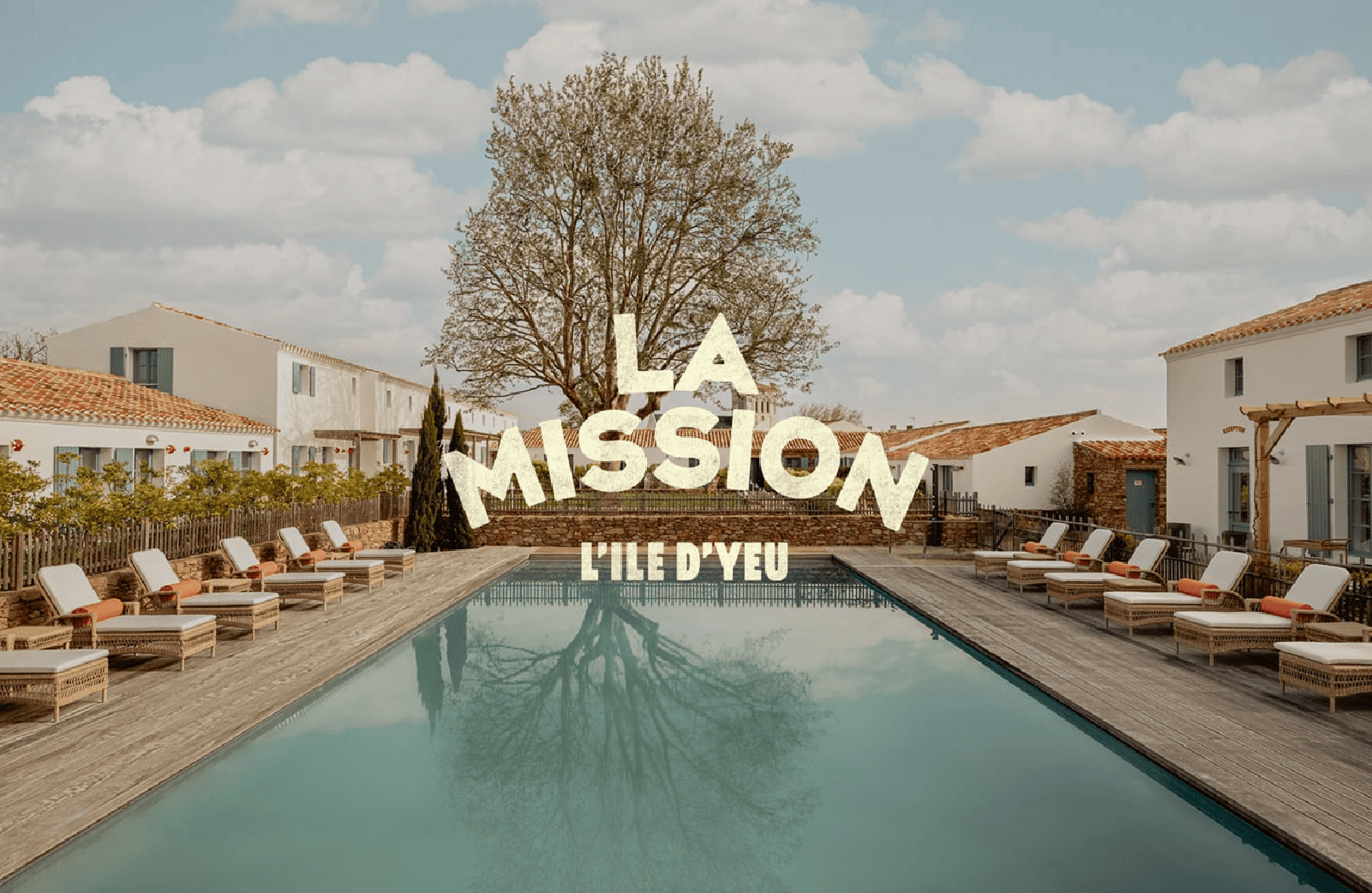
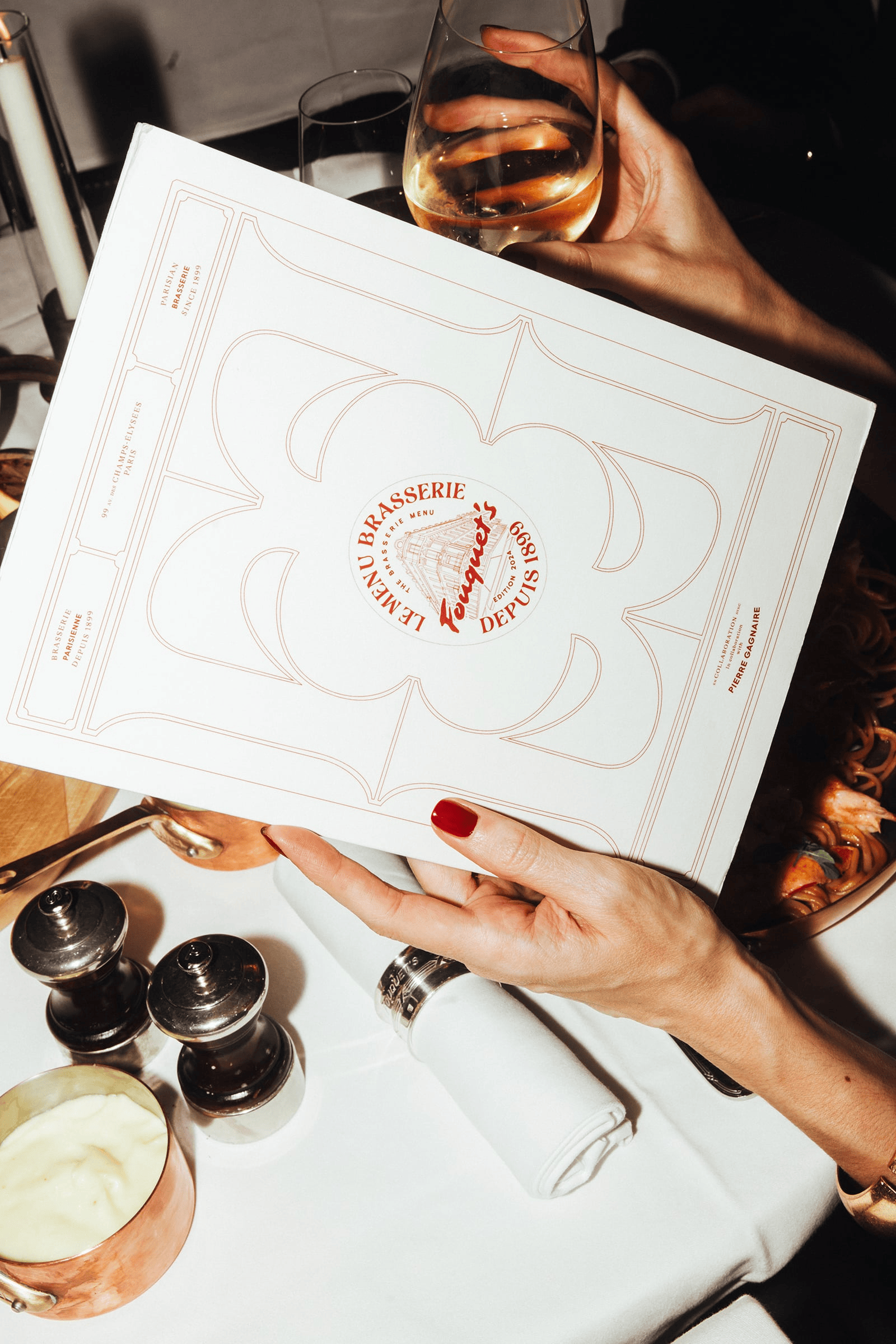
As for designing identities across different sectors, what makes the real difference for us is not so much the type of project, but rather the substance, depth, and story behind it. A new Parisian restaurant, for instance, may sometimes have less to tell than a hotel located in a historical setting.
In such cases, this leaves more room for freer creativity, while projects deeply rooted in history naturally provide a more structured and framing foundation for the creative process.
Do you have words of wisdom for someone who wants to become a graphic designer?
Martine We would advise not to overlook the business side of things. It is an essential part of our profession and deserves just as much attention and care as the creative work itself, as it is also what allows a practice to be sustainable and valued over the long term.
And above all, don’t stay confined to your own practice. Exchanging with others in the field is fundamental: we feed off each other and learn a great deal.
Thank you very much Martine!
– Interview by Malo Haffreingue